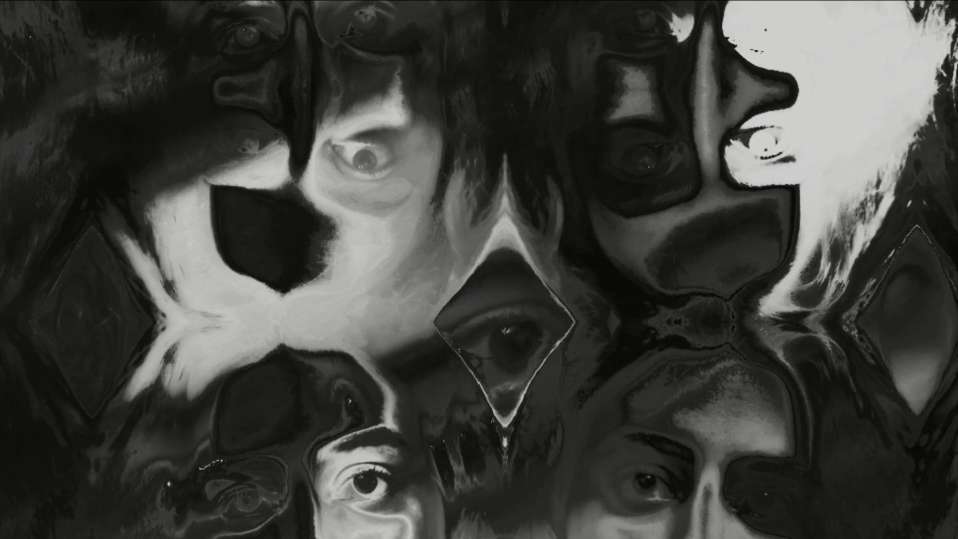
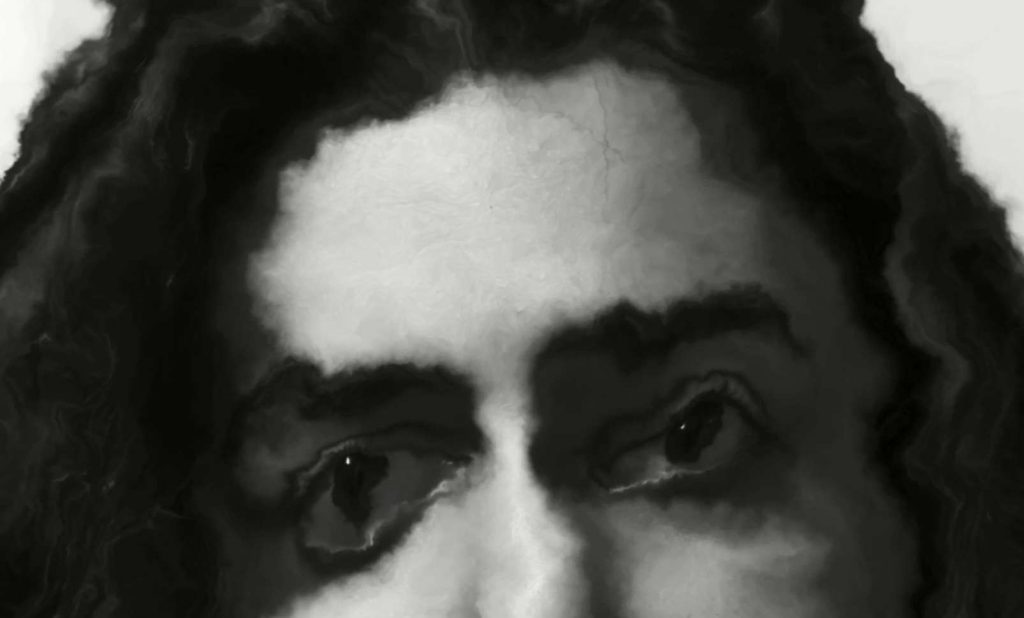
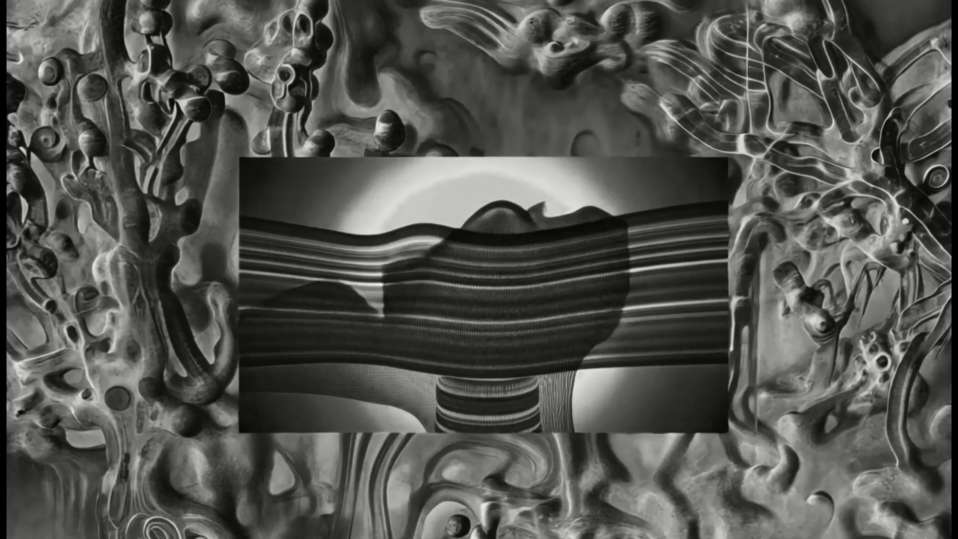
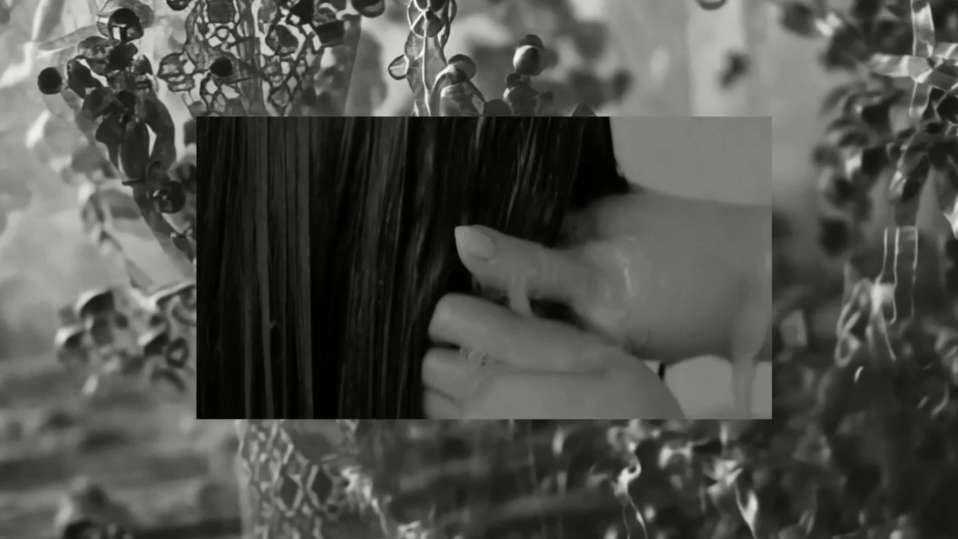
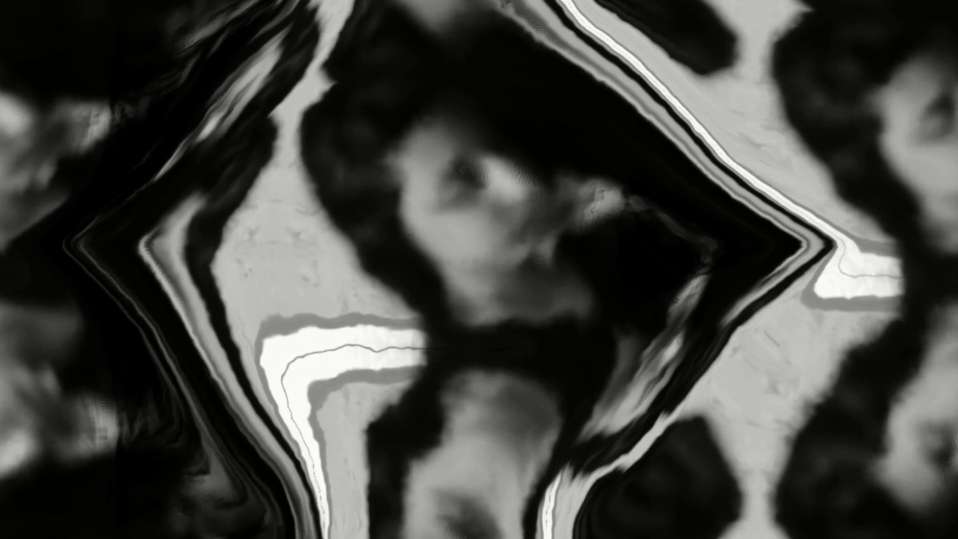
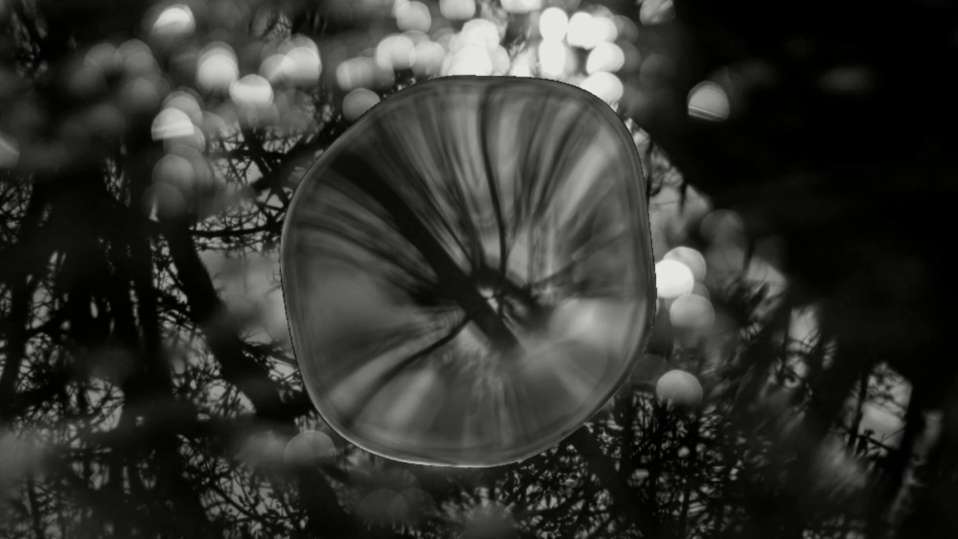
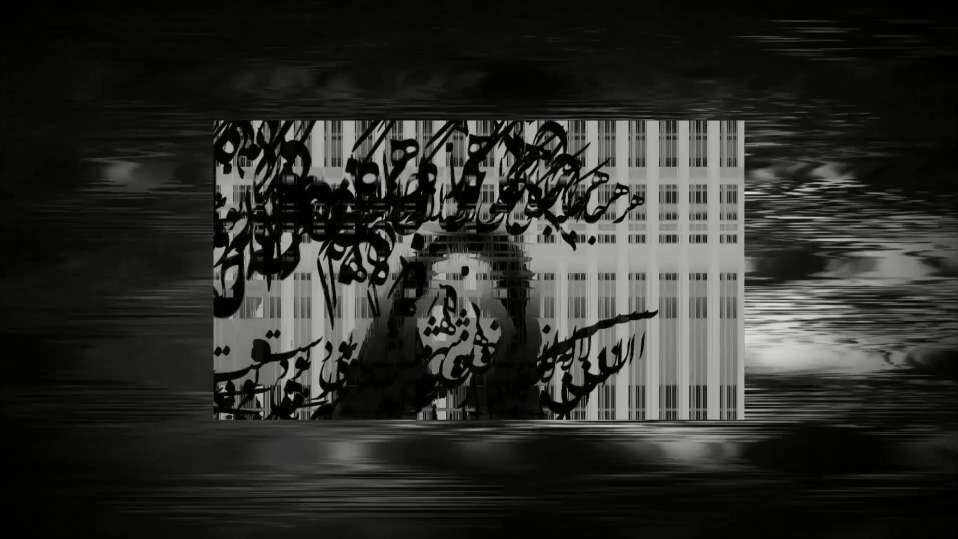
The Eternal Woman is a short experimental video that reinterprets Sadegh Hedayat’s seminal novel The Blind Owl through the lens of machine hallucination, artificial perception, and multimodal generative art. Using large language models and AI-driven image synthesis, the work re-narrates Hedayat’s fragmented and nightmarish text through an artificial doppelgänger—an entity that hovers between cognition and delusion, echoing the novel’s own spectral structure.
Rather than attempting to translate Hedayat’s prose into a straightforward visual form, the video embraces the instability and strangeness of generative processes. In doing so, it raises questions about authorship, madness, machine consciousness, and the possibility of non-human forms of storytelling.
Literary Context: Hedayat’s Fractured Vision
Originally published in 1937, The Blind Owl is widely regarded as one of the most psychologically intense and stylistically experimental novels in modern Persian literature. Written during Hedayat’s self-imposed exile, the novel is structured in two distinct yet overlapping narratives. The first follows a solitary narrator consumed by despair and haunted by a fleeting vision of a woman who appears only to die in his presence. The second half seemingly restarts the story, but instead of clarifying it, plunges further into ambiguity, paranoia, and dissolution of identity.
Themes of madness, death, doppelgängers, hallucination, and ontological instability are central to the novel. It is a text where reality is porous, memory is unreliable, and the line between the interior psyche and the external world is constantly shifting. The novel’s form reflects this instability—it is circular, repetitive, self-referential, and deeply hallucinatory.
Artificial Hallucination as Method
This video does not merely illustrate the novel—it performs it through the hallucinatory logics of machine learning models. Hallucinations in AI are typically seen as errors—failures of correspondence between output and input, between signifier and real. But in the context of The Blind Owl, hallucination is not a malfunction—it is the very medium of expression.
To mirror this, I trained and fine-tuned a large language model to regenerate the plot of the novel based on thematic and symbolic prompts derived from Hedayat’s original Persian prose. This retelling becomes unstable—phrases shift, identities blend, and temporality collapses. The result is not a direct summary, but a generative echo—the novel rewritten through a machine that does not understand death, but can replicate its poetic forms.
The AI Doppelgänger: Narrator as Neural Specter
Central to the video is the idea of the AI doppelgänger—a synthetic narrator constructed through machine learning. In the novel, the narrator is haunted by a version of himself—shadowy, indistinct, often glimpsed only through distorted mirrors or dream sequences. The machine narrator mirrors this doubling: it is not a stable identity, but an accumulation of voice fragments, statistical associations, and recursive loops.
The AI narrator is not human, but it is haunted by human language. It speaks in riddles shaped by Hedayat’s tone, filtered through the biases and datasets of the machine’s training. As it recounts the story, it generates meaning rather than transmitting it, blurring the boundary between narrative coherence and poetic delirium.